
Supplements for Weight Loss
1. Introduction
You’re throwing money away. And you probably don’t even realize it.
Every year, you spend hundreds—maybe thousands—on supplements that promise the world. “Burn fat 24/7.” “Block carbs instantly.” “Lose 10 pounds in a week.” The promises are seductive. The marketing is slick. But the results? They never match the hype.
You buy the latest “miracle pill.” You take it religiously for weeks. You wait for the transformation. But nothing happens. Your weight doesn’t budge. Your energy doesn’t improve. And eventually, you realize the truth: you’ve been sold a lie.
This is the supplement trap. And the industry is counting on you staying trapped.
Here’s what’s really happening: The global weight loss supplement industry is worth over $140 billion. That’s not because supplements work. It’s because marketing works. The industry doesn’t profit from your success—it profits from your hope. From your desperation. From your willingness to believe that there’s a shortcut, a secret, a magic solution hiding in a bottle.
But here’s the brutal truth: 95% of weight loss supplements don’t deliver what they promise. Not because they’re all fake. But because most people don’t understand what supplements actually are—and what they actually can’t do.
Supplements are not magic pills. They’re not shortcuts. They’re not solutions. At best, they’re minor aids—and only if you’ve already built a solid foundation of healthy habits. At worst, they’re expensive placebos that drain your wallet while you chase a fantasy.
But here’s what actually works: A proven breakthrough that separates science from hype. It reveals which supplements have real evidence behind them (spoiler: it’s a much shorter list than you think), which ones are complete wastes of money, and—most importantly—what actually drives sustainable weight loss.
This guide cuts through the noise. It reveals exactly which supplements are worth your money and which ones are designed to keep you trapped in the cycle of buying, hoping, and disappointing. You’ll learn the 5-10% rule that explains why even “effective” supplements deliver such modest results. You’ll discover which supplements have actual scientific backing (protein powder, certain fibers, caffeine + green tea). And you’ll learn what truly matters: the lifestyle fundamentals that no supplement can replace.
If you’re tired of wasting money on supplements that don’t work, of falling for marketing hype, or of feeling like you’re missing some secret that everyone else knows—this is where you stop throwing money away and start making decisions based on science.

Confused person in supplement aisle looking at various weight loss products
2. The Truth About Weight Loss Supplements
Before diving into specific products, it’s crucial to understand the fundamental role (or lack thereof) that supplements play in weight loss.
What Supplements Can and Cannot Do
Supplements are not magic pills. They are designed tosupplement(add to) an existing healthy lifestyle, not replace it. Think of them as potential minor aids, not primary drivers of change. The vast majority of weight loss success comes from consistent efforts in diet, exercise, sleep, and stress management.
The 5-10% Rule
Many experts suggest that even the most effective weight loss supplements might contribute, at best,5-10%to your overall results, and only if the foundational elements (caloric deficit, adequate protein, regular exercise, quality sleep, stress management) are firmly in place. If your diet is inconsistent, your sleep is poor, or you’re not moving your body, no supplement will magically fix the problem.
Marketing vs. Science Reality
The marketing of weight loss supplements often relies on anecdotal evidence,cherry-picked studies, or exaggerated claims. Phrases like “burn fat 24/7,” “block carbs instantly,” or “lose 10 pounds in a week” are red flags. True scientific research is rigorous, peer-reviewed, and often shows much more modest effects than advertised.
Disclaimer: Always consult with a healthcare professional or registered dietitian before starting any new supplement regimen, especially if you have underlying health conditions or are taking other medications.
Refueliving Top Pick for a Healthy Metabolism
Restrictive diets almost always fail because they fight your body’s natural rhythm. Instead, support your fat-burning engine directly. We recommend the All Day Slimming Tea—a simple, science-backed daily ritual to help boost metabolism and curb cravings.
3. 6 Supplements with Actual Evidence
Let’s examine some of the most popular weight loss supplements and see what the science truly says about their effectiveness.
a) Protein Powder (Whey/Casein/Plant)
- What it is: Concentrated source of protein, typically from dairy (whey, casein) or plants (soy, pea, rice, hemp).
- How it’s supposed to work: Increases satiety, boosts metabolism (due to higher thermic effect of food), and helps preserve muscle mass during weight loss.
- What the research actually shows: Strong evidence supports protein’s role in weight management. High-protein diets are consistently linked to greater satiety, reduced calorie intake, and better preservation of lean muscle mass during a caloric deficit. This is crucial because muscle burns more calories at rest than fat.
- Recommended dosage: Aim for 25-30 grams of protein per meal, or 1.6-2.2 grams per kilogram of body weight daily, distributed throughout the day. Protein powder can help meet these targets, especially post-workout or as a convenient snack.
- Quick Verdict: ✅ Worth trying. An excellent tool to increase protein intake, which is fundamental for weight loss.
b) Fiber Supplements (Glucomannan, Psyllium)
- What it is: Soluble fibers derived from plants. Glucomannan comes from the konjac plant, and psyllium from the Plantago ovata plant.
- How it’s supposed to work: Absorbs water in the digestive tract, forming a gel-like substance that promotes feelings of fullness, slows digestion, and can reduce the absorption of some fats and carbohydrates.
- What the research actually shows: Moderate evidence suggests that certain fiber supplements, particularly glucomannan, can contribute to modest weight loss, especially when combined with a calorie-restricted diet. Psyllium also shows benefits for satiety and digestive health.
- Recommended dosage: For glucomannan, 1 gram, three times a day, 15-30 minutes before meals, with a large glass of water. For psyllium, follow product instructions, typically 5-10 grams per day.
- Quick Verdict: ⚠️ Modest effect. Can be helpful for increasing satiety and improving gut health, but results are often small.
c) Caffeine + Green Tea Extract
- What it is: Caffeine is a stimulant found in coffee, tea, and energy drinks. Green tea extract contains catechins, particularly epigallocatechin gallate (EGCG).
- How it’s supposed to work: Caffeine can temporarily boost metabolism and increase fat oxidation. EGCG in green tea is thought to enhance fat burning, especially when combined with caffeine.
- What the research actually shows: Moderate evidence indicates a small, temporary increase in metabolism and fat burning. The effect is often modest and can vary significantly between individuals. Regular caffeine users may develop a tolerance, reducing its impact.
- Recommended dosage: Caffeine: 100-400 mg per day, avoiding late afternoon/evening. Green tea extract: 250-500 mg per day of EGCG.
- Quick Verdict: ⚠️ Modest effect. May offer a slight boost, but not a game-changer. Be mindful of potential side effects like jitters, anxiety, and sleep disruption.
d) Conjugated Linoleic Acid (CLA)
- What it is: A type of polyunsaturated fatty acid found naturally in meat and dairy products.
- How it’s supposed to work: CLA is believed to reduce body fat, increase lean muscle mass, and improve metabolic health.
- What the research actually shows: Mixed evidence. Some studies, particularly in animals, showed promising results. However, human studies have yielded inconsistent and often very modest results, typically showing a loss of only 0.5-1 kg (1-2 lbs) over several months compared to placebo.
- Recommended dosage: Typically 3.2-6.4 grams per day.
- Quick Verdict: ❌ Skip. The benefits are often too small to be clinically significant, and more effective strategies exist.
e) Garcinia Cambogia
- What it is: A tropical fruit extract containing hydroxycitric acid (HCA).
- How it’s supposed to work: HCA is claimed to block an enzyme called citrate lyase, which the body uses to make fat. It’s also said to increase serotonin levels, potentially reducing appetite.
- What the research actually shows: Weak evidence. While some early studies showed promise, larger, well-designed human trials have largely failed to demonstrate significant weight loss benefits. Any observed effects are usually very small and not clinically meaningful.
- Recommended dosage: Typically 500-1000 mg, three times a day, 30-60 minutes before meals.
- Quick Verdict: ❌ Skip. Not recommended due to lack of strong evidence and potential side effects.
f) Raspberry Ketones
- What it is: A natural chemical found in red raspberries that gives them their aroma.
- How it’s supposed to work: Promoted as a fat burner that can increase metabolism and fat breakdown.
- What the research actually shows: No human evidence. The claims are based almost entirely on test-tube studies and animal research (often using extremely high doses that are impractical for humans). There is no reliable scientific evidence to support its effectiveness for weight loss in people.
- Recommended dosage: Not applicable due to lack of human evidence.
- Quick Verdict: ❌ Skip. Avoid this supplement; it’s a prime example of marketing hype without scientific backing.
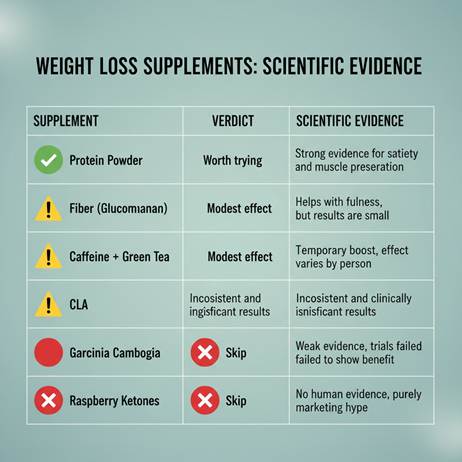
Summary table of weight loss supplements and their scientific evidence
Summary of Weight Loss Supplements
| Supplement | How it Works (Claim) | Scientific Evidence | Quick Verdict |
| Protein Powder | Increases satiety, preserves muscle, boosts metabolism | Strong | ✅ Worth trying |
| Fiber (Glucomannan, Psyllium) | Promotes fullness, slows digestion | Moderate | ⚠️ Modest effect |
| Caffeine + Green Tea Extract | Boosts metabolism, increases fat oxidation | Moderate | ⚠️ Modest effect |
| Conjugated Linoleic Acid (CLA) | Reduces body fat, increases lean mass | Mixed | ❌ Skip |
| Garcinia Cambogia | Blocks fat production, reduces appetite | Weak | ❌ Skip |
| Raspberry Ketones | Increases metabolism, fat breakdown | None (human) | ❌ Skip |
4. Supplements to Avoid Completely
Beyond those with weak or no evidence, some supplements can be outright dangerous.
- Dangerous Ingredients: Watch out for products containing ephedra (ma huang), sibutramine, or fenfluramine. These are often illegally added to supplements and can cause serious cardiovascular problems, including heart attack and stroke. Always check ingredient lists carefully.
- Red Flags in Marketing Claims: “Guaranteed weight loss without diet or exercise.”
- “Lose X pounds in Y days/weeks.”
- “Secret ingredient” or “ancient formula.”
- Claims that sound too good to be true usually are.
- How to Spot Scams: Be wary of products sold exclusively through multi-level marketing (MLM) schemes with aggressive sales tactics. Look for independent reviews, not just testimonials on the product’s own website. If a product promises to “detox” your body for weight loss, it’s likely a scam; your liver and kidneys do that naturally.
5. What Actually Works Better Than Any Supplement
The most effective and sustainable strategies for weight loss are not found in a pill bottle. They are rooted in fundamental lifestyle changes.
- Caloric Deficit: This is the single most important factor for weight loss. You must consume fewer calories than your body burns. [LINK: Why Most Diets Fail (And What Actually Works for Sustainable Weight Loss)]
- Adequate Protein Intake: As discussed, protein is crucial for satiety, muscle preservation, and metabolic health. Aim for 1.6-2.2g/kg body weight. [LINK: Protein and Weight Loss: How Much Do You Really Need?]
- Quality Sleep: Poor sleep disrupts hunger hormones (ghrelin and leptin), increases cortisol (stress hormone), and can lead to increased cravings and fat storage. Aim for 7-9 hours per night. [LINK: Why You Wake Up Tired (Even After 8 Hours)]
- Regular Exercise: While diet is primary for weight loss, exercise builds muscle, improves metabolic rate, boosts mood, and contributes to overall health. Focus on a mix of strength training and cardio. [LINK: The Best Exercises for Weight Loss (That You’ll Actually Stick With)]
- Stress Management: Chronic stress elevates cortisol, which can promote fat storage, especially around the abdomen. Incorporate stress-reducing activities like mindfulness, meditation, or spending time in nature.

6. How to Choose Quality Supplements
If you decide to use supplements, choosing high-quality products is paramount for safety and efficacy.
- Third-Party Testing: Look for certifications from independent organizations like NSF International, USP (United States Pharmacopeia), or Informed Choice. These certifications indicate that the product has been tested for purity, potency, and absence of contaminants.
- Reading Labels Properly: Active Ingredients: Ensure the supplement contains the active ingredient in a clinically effective dose.
- “Proprietary Blends”: Be cautious of these, as they often don’t disclose the exact amounts of each ingredient, making it impossible to know if you’re getting an effective dose.
- Fillers and Additives: Minimal is usually better.
- What to Look For vs. Avoid: Look for: Transparency, clear ingredient lists, reputable brands, scientific references.
- Avoid: Products with outlandish claims, secret ingredients, or those that promise “instant” results.
7. Who Should (and Shouldn’t) Use Weight Loss Supplements
When They Might Help
- To address nutrient deficiencies: If you struggle to get enough protein or fiber from your diet, supplements can fill the gap.
- As a minor aid to an already healthy lifestyle: For individuals consistently adhering to a calorie-controlled diet and exercise routine, certain supplements might offer a very small, additional benefit.
- For specific goals: E.g., protein powder for muscle preservation during a cut.
When to Avoid Them
- As a substitute for diet and exercise: If you’re looking for a shortcut, supplements will likely disappoint.
- If you have underlying health conditions: Many supplements can interact with medications or worsen existing conditions.
- During pregnancy or breastfeeding: Most weight loss supplements are not tested for safety in these populations.
- If you’re under 18: The long-term effects on developing bodies are often unknown.
Quick Check: Are you consistently hitting your protein goals through whole foods? Are you getting 7-9 hours of quality sleep? Are you exercising regularly? If not, focus on these fundamentals before considering supplements.
Consulting Healthcare Providers
Always discuss any supplement use with your doctor or a registered dietitian. They can provide personalized advice, check for potential interactions, and ensure the supplement is appropriate for your individual health profile.

8. The Bottom Line
The world of weight loss supplements is vast and often misleading. While a few supplements, likeprotein powderand certain fiber types, have decent scientific backing for their role in supporting weight loss, their effects are generally modest and contingent upon a solid foundation of healthy habits. Many other popular supplements, such as Garcinia Cambogia and Raspberry Ketones, lack robust human evidence and are often a waste of money.
Realistic expectations are key. No supplement can replace the power of a consistent caloric deficit, adequate protein intake, regular physical activity, sufficient sleep, and effective stress management. These are the true “super-ingredients” for sustainable weight loss.
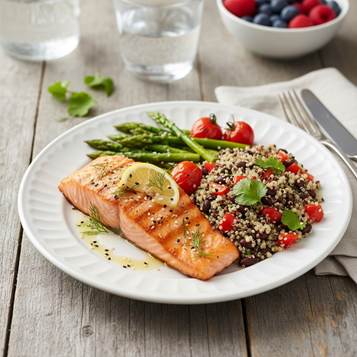
Healthy balanced meal for weight loss
9. Conclusion
Navigating the weight loss supplement landscape can be challenging, but armed with scientific knowledge, you can make smarter choices. Remember that your body is an intricate system, and sustainable weight loss is a holistic journey, not a quick fix. Focus on building healthy habits that nourish your body and mind, and consider supplements only as minor, evidence-backed tools to complement your efforts. Your long-term health and well-being are far more valuable than any fleeting promise.
Ready to support your weight loss journey with evidence-based supplements? Explore our curated selection of quality products designed to complement your healthy lifestyle.
Your Action Plan
Starving yourself isn’t a strategy; it’s a trap that ruins your metabolism. To see real, sustainable changes, you must support your body’s natural fat-burning engine. Make the smart switch to a daily ritual that works with your body, not against it. [🔥Boost Your Metabolism]
And if you have no further questions about this product, proceed directly to the bottom of the next page to order yours!

Related articles: