
Introduction
It’s a familiar scenario: you watch someone effortlessly eat a large meal, yet they remain lean, while you feel like you gain weight just by looking at food. This often leads to the frustrating conclusion, “I must have a slow metabolism.” This belief can be incredibly disheartening, making you feel like your body is working against you in your weight loss journey.
The concept of metabolism and weight loss is frequently misunderstood, surrounded by myths that can derail even the most dedicated efforts. Many people blame their metabolism for their struggles, feeling powerless to change their body composition. However, the truth is often far more empowering than these common misconceptions suggest.
In this comprehensive article, we’ll dive deep into the science of metabolism. We’ll separate fact from fiction, debunking popular myths and revealing what truly impacts your body’s ability to burn fat. By understanding the real drivers of your metabolic rate, you’ll gain practical, science-backed strategies to optimize your health and achieve sustainable weight loss.
What Is Metabolism Really?
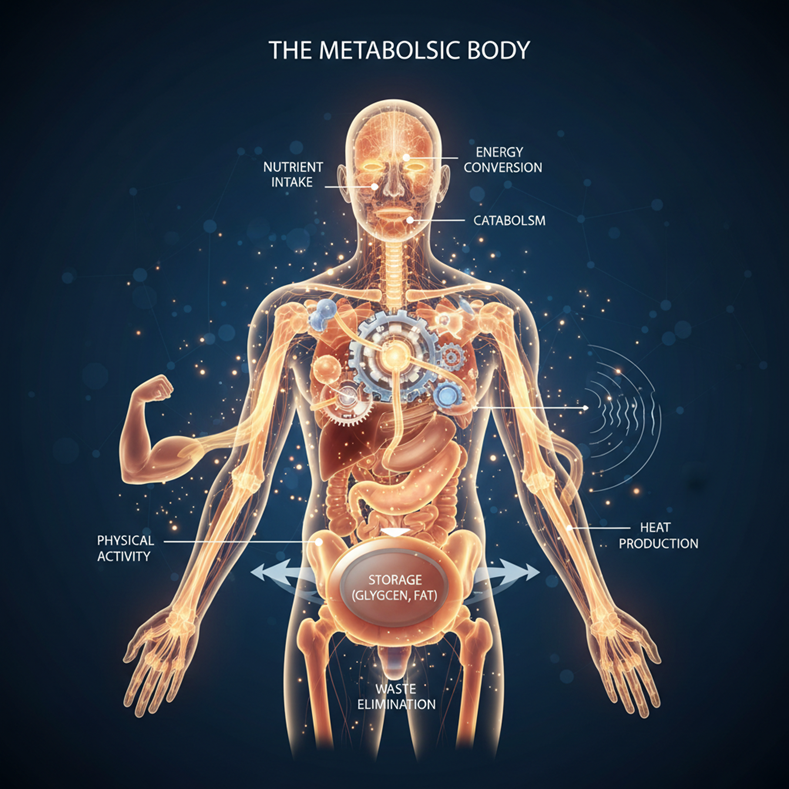
At its core, metabolism is the sum of all chemical processes that occur in your body to maintain life. Think of it as your body’s internal engine, constantly working to convert the food you eat into the energy it needs to breathe, circulate blood, grow cells, and perform every single function, even when you’re at rest.
The rate at which your body performs these processes is known as your metabolic rate. A significant component of this is your Basal Metabolic Rate (BMR). Your BMR represents the minimum number of calories your body needs to function at rest, simply to keep you alive. It’s the energy required for basic, involuntary functions like breathing, maintaining body temperature, and organ function.
What actually determines your metabolic rate? Several factors play a role:
- Muscle Mass: This is arguably the biggest factor you can influence. Muscle tissue is metabolically more active than fat tissue, meaning it burns more calories at rest.
- Age: As you age, your BMR tends to decrease, primarily due to a natural decline in muscle mass and often a reduction in physical activity.
- Genetics: While genetics do play a role, their impact on your metabolic rate is often smaller than people assume. They might influence your body’s set point or how efficiently you store fat, but they don’t dictate a “slow” or “fast” metabolism for most people.
- Hormones: Hormones like thyroid hormones, insulin, and cortisol can significantly influence your metabolism. Imbalances can affect how your body uses and stores energy.
- Activity Level: Beyond your BMR, the calories you burn through physical activity (both structured exercise and daily movement) contribute to your total daily energy expenditure.
It’s important to note that your BMR accounts for a substantial portion of your daily calorie burn, typically60-75%of the total calories you expend. Understanding this foundation is crucial for debunking the myths that often cloud the discussion around metabolism and weight loss.
Refueliving Top Pick for a Healthy Metabolism
Restrictive diets almost always fail because they fight your body’s natural rhythm. Instead, support your fat-burning engine directly. We recommend the All Day Slimming Tea—a simple, science-backed daily ritual to help boost metabolism and curb cravings.
7 Common Metabolism Myths Debunked
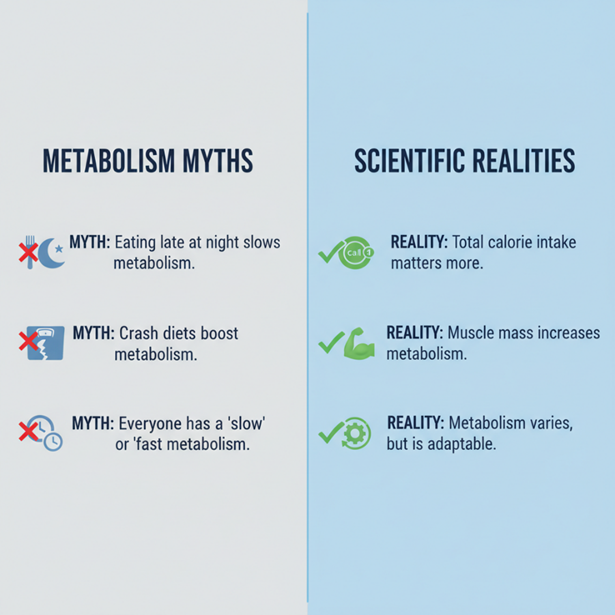
The world of weight loss is rife with misinformation, especially when it comes to metabolism. Let’s cut through the noise and expose the truth behind some of the most persistent myths.
Myth 1: “I Have a Slow Metabolism, So I Can’t Lose Weight”
This is perhaps the most common and frustrating belief. Many people feel their slow metabolism is an insurmountable barrier to weight loss.
- Reality: Research consistently shows that the metabolic rates of most individuals fall within a relatively narrow range, typically within 200-300 calories of each other, even among people of similar age, sex, and body composition. Extreme metabolic differences are rare and usually linked to specific medical conditions.
- What actually feels like “slow metabolism” is usually: Underestimating calories consumed: Studies reveal that people often underestimate their food intake by a significant margin, sometimes by as much as 50%. Those extra bites, sips, and snacks add up quickly.
- Overestimating calories burned: Similarly, we tend to overestimate how many calories we burn during exercise. A 30-minute walk might feel like a lot, but it often burns fewer calories than anticipated.
- Muscle loss from crash dieting: Repeated cycles of restrictive dieting can lead to a loss of metabolically active muscle tissue. This does slow down your BMR, making subsequent weight loss harder.
- Quick Check: Signs it’s NOT your metabolism Are you consistently tracking your food intake accurately?
- Are you getting at least 7-9 hours of quality sleep?
- Do you manage your stress levels effectively?
- Are you incorporating strength training into your routine?
- If you answered “no” to any of these, these lifestyle factors are more likely culprits than an inherently slow metabolism.
Myth 2: “Eating Small, Frequent Meals Boosts Metabolism”
This myth suggests that by constantly “feeding the fire,” you can keep your metabolic rate elevated throughout the day.
- Reality: While digestion does require energy (known as the thermic effect of food, or TEF), the total TEF over a 24-hour period is primarily determined by the total number of calories and macronutrients consumed, not how often you eat them. Whether you eat 3 large meals or 6 small ones, if the total calories and macros are the same, your overall TEF will be very similar.
- What matters more: Your total daily calorie intake and, crucially, your protein intake. Protein has a higher TEF than carbohydrates or fats, meaning your body burns more calories digesting it.
- The grain of truth: For some people, eating small, frequent meals can help manage hunger, stabilize blood sugar, and prevent overeating at subsequent meals. If it helps you stick to your calorie goals, it’s a valid strategy, but not because it magically “boosts metabolism.”
Myth 3: “Certain Foods (Like Green Tea and Chili Peppers) Dramatically Boost Metabolism”
The allure of a “metabolism-boosting” food is strong, promising easy fat loss.
- Reality : While some foods, like green tea (due to catechins and caffeine) and chili peppers (due to capsaicin), can have a very slight, temporary effect on your metabolic rate, these effects are minimal. We’re talking about an increase of perhaps 10-50 calories burned over several hours – not enough to significantly impact weight loss on their own.
- Not magic, but can be part of a healthy diet: These foods offer other health benefits, such as antioxidant properties. Including them in a balanced diet is great, but don’t expect them to be a magic bullet for burning fat.
- Better approach: Focus on overall diet quality. A diet rich in whole, unprocessed foods, lean protein, and plenty of fiber will support a healthy metabolism far more effectively than relying on isolated “superfoods.”
Myth 4: “Metabolism Naturally Slows Down Dramatically with Age”
Many people resign themselves to age-related weight gain, believing their metabolism is destined to decline.
- Reality: While there is a slight, natural decrease in BMR with age, the most significant slowdown observed in older adults is primarily due to two factors: Muscle loss (sarcopenia): As we age, we tend to lose muscle mass if we don’t actively work to maintain it. Since muscle is metabolically active, losing it directly lowers your BMR.
- Reduced activity level: Older adults often become less physically active, further reducing their total daily calorie expenditure.
- Good news: This slowdown is largely preventable and even reversible with consistent strength training and maintaining an active lifestyle. Research shows that individuals who remain physically active and continue to build or maintain muscle mass can largely preserve their metabolic rate well into old age.
Myth 5: “Starvation Mode Prevents Weight Loss”
The idea of “starvation mode” suggests that if you eat too little, your body will cling to fat and refuse to lose weight.
- Reality: While your body does adapt to calorie restriction, it’s not the “starvation mode” often portrayed. This phenomenon is called metabolic adaptation (or adaptive thermogenesis). When you reduce calories, your body becomes more efficient, burning slightly fewer calories for the same activities. This is a survival mechanism, but it doesn’t mean you stop losing weight in a calorie deficit.
- What actually happens: Your body will still burn fat for energy if you are consistently in a calorie deficit. The rate of weight loss might slow down, but it won’t stop entirely unless your calorie intake matches your reduced expenditure.
- The real problem: Crash diets that lead to extreme calorie restriction often result in significant muscle loss. As discussed, losing muscle does slow your metabolic rate, making it harder to maintain weight loss long-term and setting you up for rebound weight gain.
Myth 6: “Thin People Have Fast Metabolisms”
It’s easy to assume that naturally thin individuals possess a uniquely fast metabolism.
- Reality: Counterintuitively, heavier individuals often have a FASTER metabolism than thinner people. This is because a larger body requires more energy (calories) to perform basic functions and move around. There’s simply more tissue to support.
- Why they’re thin: Thin people are usually thin not because their metabolic rate is inherently faster, but because of a combination of factors: Lower appetite: They may naturally consume fewer calories without conscious effort.
- More movement: They might have higher levels of NEAT (Non-Exercise Activity Thermogenesis). NEAT refers to all the calories burned through non-exercise activities like fidgeting, standing, walking around the house, or taking the stairs. This can vary by hundreds, even thousands, of calories between individuals.
- Genetics: Some genetic factors can influence appetite regulation or fat storage patterns.
Myth 7: “You Can Significantly Change Your Metabolism with Supplements”
The market is flooded with “metabolism boosters” promising dramatic results.
What ACTUALLY Affects Your Metabolism
Instead of chasing myths, focus on the factors you can genuinely influence to support a healthy metabolism and weight loss. These are the levers you can pull for sustainable results.
The 4 Factors You CAN Control:
- Build and Maintain Muscle Mass Why it matters: Muscle tissue is metabolically active. Each pound of muscle burns approximately 6-10 calories per day at rest, compared to about 2 calories for a pound of fat. More muscle means a higher Basal Metabolic Rate.
- How to do it: Incorporate strength training into your routine 2-3 times per week. This doesn’t mean becoming a bodybuilder; it means challenging your muscles with weights, resistance bands, or bodyweight exercises.
- Actionable tip: Aim for adequate protein intake (see point 3) to support muscle growth and repair.
- Stay Active Throughout the Day Why it matters: Beyond structured exercise, your Non-Exercise Activity Thermogenesis (NEAT) plays a huge role in your total daily calorie expenditure. NEAT can vary by over 2,000 calories per day between individuals!
- How to do it: Look for opportunities to move more.
- Actionable tips: Take standing or walking breaks every hour, use a standing desk, park farther away, take the stairs instead of the elevator, do household chores, or walk while on the phone. These small movements add up.
- Eat Enough Protein Why it matters: Protein has the highest thermic effect of food (TEF) among macronutrients. Your body burns 20-30% of protein calories during digestion, compared to 5-10% for carbs and 0-3% for fats. This means you burn more calories just by eating protein.
- Benefits: Protein also helps preserve muscle mass during weight loss (crucial for maintaining your metabolic rate) and is highly satiating, helping you feel fuller for longer.
- Actionable tip: Aim for 25-30 grams of protein at every main meal. Good sources include lean meats, poultry, fish, eggs, dairy, legumes, and protein supplements.
- Get Quality Sleep Why it matters: Sleep deprivation profoundly disrupts hormones that regulate appetite and metabolism. Lack of sleep increases ghrelin (the hunger hormone) and decreases leptin (the satiety hormone), leading to increased cravings and calorie intake. It also reduces insulin sensitivity, making your body less efficient at processing glucose.
- Actionable tip: Prioritize 7-9 hours of quality sleep per night. Establish a consistent sleep schedule, create a dark and cool sleep environment, and limit screen time before bed.
The Factors You CAN’T Control:
- Genetics: While genetics influence body shape and fat storage, their impact on your metabolic rate is often less significant than lifestyle choices.
- Age: While age-related decline in BMR is real, it’s largely manageable through maintaining muscle mass and activity levels.
- Hormonal conditions: Conditions like hypothyroidism can genuinely slow your metabolism. If you suspect a hormonal issue, work with a doctor for diagnosis and treatment.
The Truth About “Metabolic Damage”
The term “metabolic damage” often arises in discussions about yo-yo dieting and the fear that repeated weight loss and gain can permanently harm your metabolism.
- Reality: While your body does undergo metabolic adaptation (as discussed in Myth 5), research suggests that this adaptation is largely reversible. Your metabolic rate can recover as you stabilize your weight and re-establish healthy habits. The idea of permanent “damage” is largely a misconception.
- What research shows: The biggest risk associated with repeated crash diets is not permanent metabolic damage, but rather the significant muscle loss that often accompanies rapid, unsustainable weight loss. Losing muscle directly lowers your BMR, making it harder to keep the weight off in the long run.
- Solution: The key to avoiding the negative cycle of metabolic adaptation and muscle loss is to approach weight loss with patience and sustainability. Opt for moderate calorie deficits, prioritize protein, and incorporate strength training to preserve muscle. This allows your body to adapt more gently and recover more effectively.
Practical Takeaways
It’s time to shift your perspective on metabolism and weight loss. Your metabolism is likely more normal than you think, and you have far more control over it than you might believe. Stop blaming an elusive slow metabolism and start empowering yourself with actionable strategies.
Focus on what you can control: building muscle, increasing daily movement, prioritizing protein, and getting quality sleep. These aren’t quick fixes, but they are the foundational pillars for a healthy, efficient metabolic rate and sustainable fat loss.
Here are some quick action steps you can implement starting today:
- Add strength training 2-3 times per week: Even 20-30 minutes per session can make a difference.
- Eat protein at every meal: Aim for a palm-sized portion of lean protein to support muscle and satiety.
- Move more throughout the day: Set a timer to stand up and walk for 5 minutes every hour.
- Prioritize sleep: Aim for 7-9 hours of uninterrupted sleep each night.
Remember, consistency trumps intensity. Small, sustainable changes compound over time to create significant, lasting results.

Conclusion
The journey to understanding metabolism and weight loss can be complex, but by debunking common myths, we uncover a powerful truth: most perceived metabolism “problems” are actually reflections of lifestyle factors that are within your control. You don’t have to be a victim of a “slow metabolism.”
By focusing on building muscle, increasing daily movement, prioritizing protein intake, and ensuring adequate sleep, you can optimize your body’s natural ability to burn fat and maintain a healthy weight. This approach is not about quick fixes or restrictive diets; it’s about building sustainable habits that support your long-term health and vitality. You have more control than you think.
Your Action Plan
Starving yourself isn’t a strategy; it’s a trap that ruins your metabolism. To see real, sustainable changes, you must support your body’s natural fat-burning engine. Make the smart switch to a daily ritual that works with your body, not against it. [🔥Boost Your Metabolism ]
And if you have no further questions about this product, proceed directly to the bottom of the next page to order yours!

Related articles: